
Event
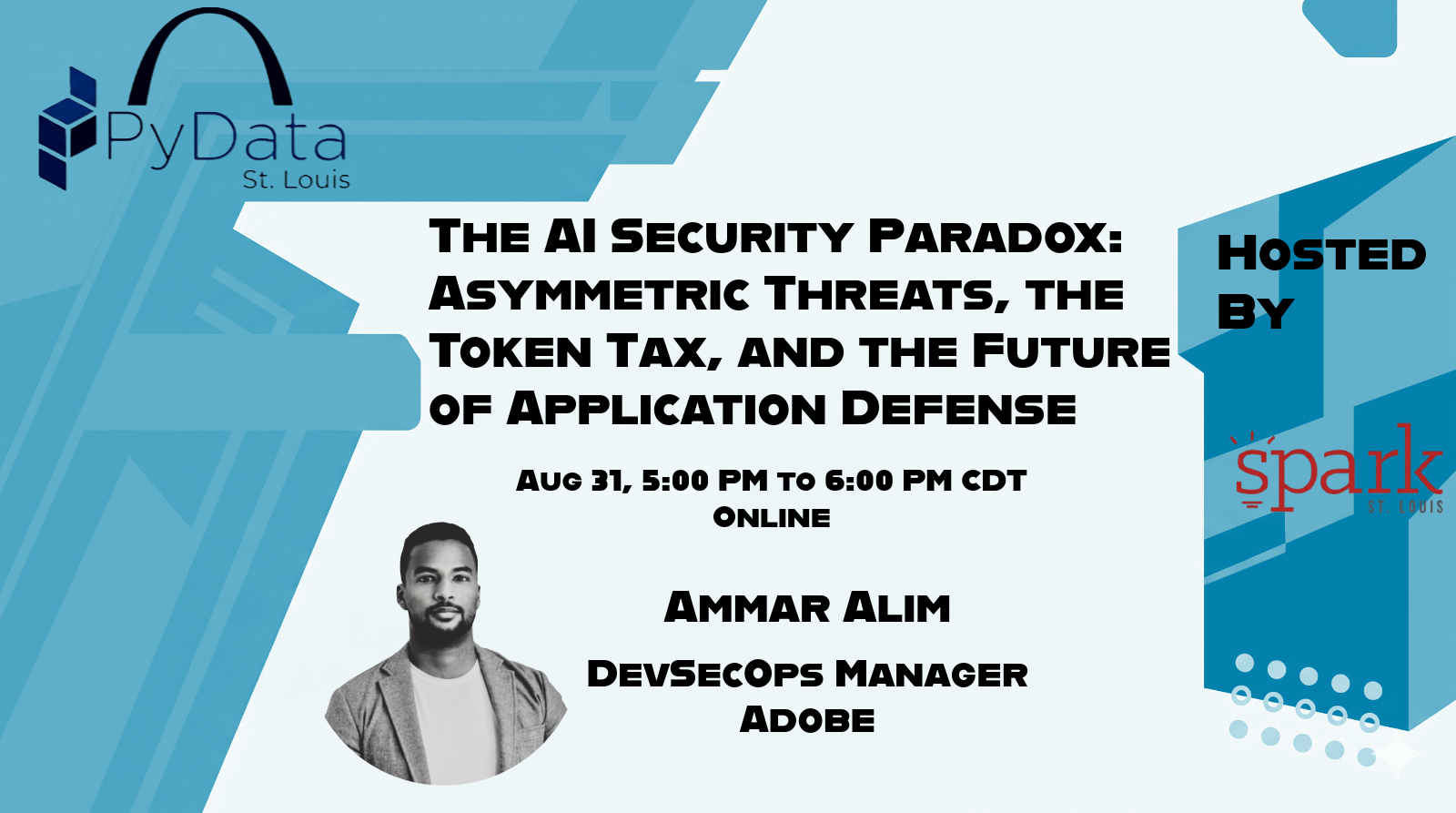
The AI Security Paradox: Asymmetric Threats and the Future of Defense
2026-08-31 · 5:00 PM
Online
Event photos
About this event
Software engineering is undergoing its biggest transformation in decades, but application security is shifting in the opposite direction. While AI tools allow developers to write code faster than ever, foundation models trained on decades of public code are accelerating the volume of vulnerable software flowing into production. At the same time, AI grants attackers infinite patience and speed—enabling automated reconnaissance and rapid exploit generation against large, complex enterprise attack surfaces.
This creates a paradox: security hasn't improved by default, and organizations are effectively paying a 'token tax' to scan and fix the very vulnerabilities generated by AI.
In this session, Ammar Alim (Product Security Engineering Leader at Adobe) breaks down how developers and security practitioners across all experience levels can rebalance this equation. We will explore:
The 'Wounded Buffalo' Effect: Why legacy codebases and AI-driven attack vectors give adversaries a short-term advantage.
The Token Tax Fallacy: Why buying off-the-shelf security tokens won't solve the security crisis without deep architectural integration.
Building Next-Era Defense Systems: How to combine deep domain/business logic awareness with custom AI engineering (RAG, knowledge graphs, and autonomous self-healing agents) to turn reactive security into automated, context-aware pipelines.
Agenda
- Meet & Greet, networking, introductions
- Talk + Q&A
- Wrap-up
Speaker

Ammar Alim
Ammar Alim is the Manager of DevSecOps at Adobe, where he leads a team building solutions that help engineering teams address security issues more efficiently, focusing on seamless integration between application security and DevOps processes. Previously, he was Cloud Security Engineer Manager at Frame.io and Lead Cloud Security Engineer at ActBlue Technical Services, where he built the cloud security function from scratch and implemented controls to detect and prevent nation-state attacks. Ammar is also passionate about helping people from non-technical backgrounds enter the cybersecurity field. Outside work, he enjoys the outdoors and staying fit.